Showing posts with label book review. Show all posts

Wednesday, January 10, 2018

The Year 2017 in Books: What Rocked, What Did Not

In 2017, I read 60 books. I think.

Keeping track isn't as easy as it should be. Marking e-books as "read" on Goodreads is easy, thanks to a feature that prompts readers to "mark as currently reading" when opening the book and automatically listing them as "read" when flipping the last page.


Alas, print books don't offer the same auto-prompt when a reader cracks the spine. However, I try to remember to record completed print and audio book titles on my cloud drive, and cross-check my drive list against Goodreads from time to time. It's a handy resource to remind myself why a book seems so familiar. (Ahem, Mariana!)


Which is a long way of saying, "In 2017, I am pretty sure I read 60 books, give or take."


It's not a personal best, but it is a healthy number considering my bout of reading ennui this summer. A friend experienced the same thing last year, and I didn't understand until I stood in front of my bookshelves and perused my bursting Kindle and could only muster, "Meh." I managed to recover after a few months by gorging on "junk food" books, mostly rumpled paperback mysteries with titles that had numbers, letters, or other gimmicks. I may not be completely through it, but I feel like I'm on the reading side of my slump.


Of the 60 books I finished in 2017, Goodreads calculates that  I averaged 271 pages per book, so an occasional Inside-Outside Dinosaur balances out Anna Karenina


I discovered some interesting graphic novels this year, which were surprisingly substantial. Before I read them, I was known to confuse them with comics. I understand better the differences between the genres (but still counts as "reading," people!).

Here are my top eight favorite books of the year, in no particular order:


  • What the Hell Did I Just Read? — The latest raucous David Wong novel, whose title is accurate: I couldn't describe what I read in the book.
  • Little Fires Everywhere — A storm quietly brewing in suburban Ohio in the 1990s, reminding us how much our world, and expectation of privacy, have changed.
  • Uprooted — A new fairy tale with a strong female lead character. (Review here)
  • Pride and Prejudice — A wonderful classic that is as good as everyone told me, and I will re-read often. (Related article here)
  • Big Little Lies — Kept me going until the last page. If you watch the series, don't skip the book. (And if you read the book, you may not want to watch the series, I've been told.)
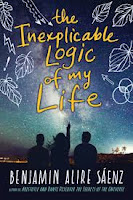
  • The Inexplicable Logic of My Life — Another fabulous novel by Benjamin Alire SΓ‘enz, who can share the truest, deepest parts of a teenage boy's heart.
  • The Handmaid's Tale — Alas, it is not as far-fetched as it seemed when first read it back in 1987.
  • Wrinkles — Old people are people, too.
My least favorite books were:
  • Origin — One of my favorite authors has fallen asleep at the keyboard, and his latest book is almost a parody of his better tales. (Review here)
  • Yesternight — Cat Winters wrote a good book until she went off the rails at Chapter 25.
  • The Case Against Sugar — The author made a case, relentlessly, in chapters that started to blend together. The takeaway, in one sentence: sugar is big business, and the sugar industry has worked hard to protect their investment, at the cost of demonizing other food and throwing up smoke screens. 


Here is a complete list of what I read, and the format in which I read it (print πŸ“–, ebook πŸ“², or audiobook πŸŽ§). 


  1. What the Hell Did I Just Read? πŸ“–
  2. Do Unto Otters πŸ“–
  3. Miracles and Other Christmas Stories πŸ“²
  4. Adulthood is a Myth πŸ“²
  5. The Little Pup Collection πŸ“²
  6. Drama πŸ“²
  7. OriginπŸ“²
  8. Little Fires Everywhere πŸ“–
  9. One Book in the Grave (Bibliophile Mystery #5) πŸ“–
  10. The Tortilla Cat πŸ“–
  11. The Magician King πŸ“²
  12. Good and Cheap πŸ“²
  13. Uprooted πŸ“² 🎧
  14. The 5 Second Rule πŸ“²
  15. Truly Madly Guilty πŸ“²
  16. The Magicians πŸ“²
  17. Ghosts πŸ“²
  18. Gwendy’s Button Box πŸ“²
  19. Can't We Talk About Something More Pleasant? πŸ“²
  20. Yesternight πŸ“–
  21. Mariana πŸ“²
  22. Paws and Effect πŸ“²
  23. My Cousin Rachel πŸ“–
  24. Murder Under Cover (Bibliophile #4) πŸ“–
  25. The Graveyard Book Graphic Novel, Vol. 2 πŸ“–
  26. Forbidden Brides of the Faceless Slaves in the Secret House of the Night of Dread Desire  πŸ“–
  27. Other Wordly πŸ“–
  28. Wrinkles πŸ“–
  29. Clockwork Scarab πŸ“²
  30. Star Wars: Jedi Academy 1 πŸ“²
  31. The Case Against Sugar πŸ“²
  32. Pride and Prejudice 🎧
  33. The Handmaid’s Tale πŸ“² 🎧
  34. Forgotten Bones πŸ“–
  35. My Best Everything πŸ“–
  36. The Lies That Bind (Bibliophile #3) πŸ“–
  37. Anna Karenina πŸ“² 🎧
  38. Big Little Lies πŸ“–
  39. The Inexplicable Logic of My Life 🎧
  40. Speaking From Among the Bones πŸ“–
  41. The Burning Page πŸ“²
  42. Ruined πŸ“–
  43. Ida, Always πŸ“²
  44. The Possession of Mr. Cave πŸ“–
  45. The Shadow Land πŸ“–
  46. Once Upon a Poem πŸ“–
  47. The Masked City πŸ“²
  48. The Bookman’s Tale πŸ“²
  49. Slumdog Millionaire 🎧
  50. The Annotated Godfather πŸ“²
  51. Conclave πŸ“–
  52. Fantastic Beasts and Where to Find Them πŸ“²
  53. Congratulations, By the WayπŸ“²
  54. Cast Iron Nation πŸ“–
  55. Sir Gawain and the Green Knight 🎧
  56. Toss the Gloss πŸ“²
  57. Hillbilly Elegy πŸ“–
  58. Inside-Outside Dinosaurs πŸ“–
  59. A Cookbook Conspiracy πŸ“²
  60. Turbo Twenty-Three πŸ“²

Have you read any of these books? Which did you like best, or least?


I just finished two good reads, A Gentleman from Moscow and The Dire King: A Jackaby Novel, and I recommend both. In fact, A Gentleman from Moscow ticks off so many boxes with great finesse I am still enamored, even days after finishing it.

Still on my nightstand: Little Dorrit.

What's on your nightstand?

Let's chatchattingwithchris@gmail.com!

Tuesday, October 18, 2016

Who Tells the True Story of a Marriage?

Marriage is unknowable to anyone but the couple — and, in Fates and FuriesLauren Groff illustrates that even they may not know the complete story.

In her third novel, Groff created an interesting, complex view of a marriage between two very different people who appear deeply in love and totally committed to each other.

The first half of the book, "Fates," captures the tale of Lancelot "Lotto" Sutterwhite, a walking contradiction who finds his calling in the theater. The second half of the tale, "Furies," is told from Mathilde's wifely perspective.

The sections brilliantly capture the characters: "Fates" is careless, while "Furies" is tight and angry. (I picture Tilda Swindon as Mathilde; strange I don't have the same bead on Lotto's Hollywood counterpart.) 

I like the retelling of tales, so to have the same life story told from two different perspectives is brilliant, and a very good demonstration about how little we truly know others.


Lotto kept many friends around him so he would feel well-liked, even loved. He let them ebb and flow as they needed, drawing all of his energy from them, but primarily from Mathilde. In contrast, Mathilde kept people around to satisfy Lotto and for an almost business-like relationship that never quite reached friendship. Lotto skimmed across the top of life, paying attention to things outside himself when they interested him; Mathilde was always looking out — looking out for Lotto and their survival.

The tone and energy of each of the halves was deliciously different. The author thought of the stories as two books (Γ  la Mr. Bridge and Mrs. Bridge), but I agree with the editor: putting the volumes together was the right move. Not only did it require both halves to be read as a single tale, but it also required them both to be spare enough to comprise a single novel.

This interesting tale, a "he said/she said" story full of contradictions, was not flawless. The third-person narrator is unnecessarily interrupted by a Greek chorus, omnipotent and occasionally foretelling (which, only on a rare occasion, was welcome). The author used very specific words, which I looked up with a click on my Kindle — and I am still pondering the value of that specificity against the distraction. I love new language, but I almost felt as if Groff handed me a box of vocabulary words.

The ending felt abrupt, so I overthought it and completely misread it. Thankfully, the author was able to set me straight after I met her at her lecture, and I could enjoy it even more.


I am a fan of Groff and enjoyed this novel. I would recommend it, and her other two novels: The Monsters of Templeton and Arcadia. I'll soon be reading her short story selection Delicate Edible Birds, too.

So, are you more Lotto or Mathilde?

Sunday, February 28, 2016

'Beastly Bones' Brings More Magic to Readers

In Beastly BonesWilliam Ritter has created another delightful tale with the astute R.F. Jackaby and clever Abigail Rook, who are on the case of shapeshifters, dinosaur bones and a few more otherworldly creatures (including humans).

This tale may begin with kittens, but don't let that lull you into a false sense of security. This is a fast-paced story, a mystery wrapped in a riddle with lots of excitement and revelations. It is funny and poignant, clever and revealing.

Jackaby is a detective who specializes in the supernatural. Abigail fled England to find opportunity beyond the boundaries enforced by her family. It's 1892, and her options are limited — until she meets Jackaby and joins one of the most unique and delightful detective agencies on this side of the Atlantic.

Beastly Bones jumps right into the thick of things with shapeshifters who, for the time being, are adorable kittens (mostly). Their owner soon meets an unfortunate end, and Jackaby and Miss Rook are plunged into a mystery that takes them away from New Fiddleham to Gad's Valley to help their police officer friend, Charlie. A dinosaur skeleton has been unearthed on a farm  — and a mysterious death connects the valley to New Fiddleham.

Not only are we reunited with our favorite characters, we meet another: Hank Hudson, an old friend of Jackaby's, a trapper by trade with an interest in the more rare species. The mystery of New Fiddleham lurks in Gad's Valley, and Charlie has to try to keep the peace, assist in the investigation as only he can, and keep two hotheaded paleontologists from harm (as well as harming each other). Nellie, an intrepid reporter, does her part to get the facts, and the others in Gad's Valley round out this interesting cast of characters.

Readers will laugh out loud and gasp in surprise, well up with a tear or two and root for the underdog (literally). It's a great romp into the unknown with the best guides imaginable led by an occultist and a paleontologist.

This is the second in the series, so consider taking a few hours to read the first book, Jackaby. (I estimate "a few hours" because, if you're like me, you'll finish it in record time.) One need not read the first book to enjoy the second, of course — but an intimacy with the cast of characters will add to a reader's enjoyment of the story.

Readers, rest assured, this is not the end of the story: a third tale in the series is scheduled for publication.

Additionally, Algonquin Young Readers offers a novella titled The Map: A Jackaby Story to tide over Jackaby fans.

Finally, visit the publisher's website for  extras available for both Jackaby and Beastly Bones.

Enjoy the fun and suspense that only R.F. Jackaby and Abigail Rook can provide, and learn a little about a lot of unusual things along the way.

Tuesday, January 7, 2014

The House of Silk and Sherlock Holmes: A Novel Worth Reading

When you get your hands on The House of Silk — and trust me, you want to! — plan to do nothing for the next few days but read. Anthony Horowitz's novel is a rip-roaring, non-stop adventure with shocks and surprises on every page.

Sherlock Holmes and Dr. John Watson may be the rage thanks to the BBC, but this book will do its part to boost his popularity.

The premise is intriguing: Watson recorded the details of a case so shocking, so awful, that it had to be kept sealed and hidden for a century after it occurred.

The story is simple — well, as simple as Holmes can permit. Holmes is approached by an art dealer who feels threatened by a figure stalking his home after he recently returned from American on a work-related matter. Is it the man from America come to seek revenge? Before we can answer that question, there is death, violence and a silk ribbon wrapped around the wrist of a street urchin. Thus they enter the House of Silk — something so diabolical, so secret that even those who know don't know but to know they shouldn't know, and neither should Sherlock.

And what a story. Horowitz has a way of hinting at the future while remaining grounded in the story's present. He introduces a few Baker Street regulars in a way that offers a possibly new way to view them. He weaves intrigue into every encounter, making the reader's guesses all that more fun when they see how wrong, or how right, they are.

The characters are well-presented, the story taut with suspense and intrigue, the writing concise but rich in detail and precise language.

In the end, it maintains the myth but helps reveal just enough of the man that is Sherlock Holmes (and Watson) to earn its authorization from the estate of Sir Arthur Conan Doyle. It's new but not too new, it's old hat but in a warm and familiar way, and it is indeed shocking and awful a story that could only be told in today's world.

Walk through London and its suburbs during the waning years of the 19th century with two trusted characters and learn about the town, its people and its history. It's rooted in its time and place, but surprisingly modern, with the rich language of its time trimmed just enough to fit on both the pages of today and yesterday.
I recommend this book, but only if you're ready to read into the wee hours of the night, then pick it up first thing in the morning, and stay in its pages until long after you've finished reading it. It's that good.

Monday, December 30, 2013

Caleb's Crossing, Without Much of Caleb

Caleb's Crossing has been on my bookshelf for years. My friend Carole and I purchased it in 2011 as soon as we saw it for sale. Both she and I enjoyed Geraldine Brooks' books in the past. We have seen met her on previous book signing tours and enjoyed her other books.

And yet this one languished on our shelves for years.

After reading it, I can see why: it was not her best.

The story is of Caleb, a Native American Indian who lived on the island now known as Martha's Vineyard, who was the first of his tribe to graduate from Harvard University in 1665.

Well, not exactly. It's as much about the narrator, Bethia Mayfield, as the character named in the title. Bethia  is a teenage English girl who, remarkably, is a feminist of her age. She was smarter than her older brother, who was being educated to follow his father into the ministry, but was denied an education because of her sex. She chafed against her society's boundaries. One of her society's boundaries was a relationship with any American Indian on the island, with whom her settlement had an uneasy truce. She chose a relationship with a young male of the tribe, an added taboo.

Alas, Caleb's world was described by an outsider with no intimate knowledge of his culture. Indeed, she harbored many of the biases against Caleb's people as her own society did. The second-hand information, filtered through Bethia's eyes, dampened my enthusiasm for the novel. Never did we get Caleb's perspective, and Caleb's words were shared through Bethia, who was not a reliable narrator.

The novel is written as a personal journal kept by Bethia — often written days, months, even years after an event. Her details are complete, rich and full,  not at all like journal entries one would expect so long after the fact, and another reason for me to mistrust her as a narrator. References to historical events and characters were carefully shared to create a sense of connection to this colonial period. If you like colonial history, this might be a good book for you.

Bethia's character was a 21st century woman who every once in a while flashed a colonial, meeker face. The constant interjection of her religious beliefs in her writing and the use of colonial-period language didn't change that fact: she was not a girl of that age.

Finally, there was little urgency in the tale. Only once or twice did I rush through the story to discover the resolution of a situation.

I'm sorry to say I wouldn't recommend this book.

I can, however, recommend every other tome in Brooks' collection. Consider that, then read Caleb's Crossing, and tell me if you agree with my assessment.

Monday, November 18, 2013

The Dinner: The Minion Said It All

I remember the initial clamor over The Dinner. Radio hosts were gasping, "It's an incredible book!" So I picked it up — and found it tedious.

Then I did the only thing I could do: I gave it to my friend Carole, my Other Reading Self, to help me see if it was me or the book. When she handed it back, she said, "You have to give it another try."

Then I mentioned on Twitter that I was giving The Dinner another shot, Random House Canada told me this.

Now I tell you:


Paul and Claire meet Serge and Babette for dinner. What happens next: well, the minion said it all.

Books in translation often display a clumsy gait to me, especially books originally written in German or Germanic languages. (The Reader failed this reader before I even got to the pedophilia.) However, This translation was very smooth, allowing the undercurrent of the narrator's apparent awkwardness to knock the reader off-kilter.

And don't get sidetracked by the narrator's tangents. Don't try to make these threads weave into a familiar pattern. My mistake was that I thought the narrator was drawing me a road map. What I needed, instead, was to sit back and let the story do the driving.

Let me know when you read it. You'll need to talk. I'll be here.

Thursday, November 7, 2013

Tina Fey's Bossypants is Safe, But Still Enjoyable

I wasn't sure what to expect from comedienne Tina Fey's memoir, Bossypants. She is so young, yet iconic and very successful. I wasn't completely disappointed with the memoir, but I also wasn't completely satisfied.
I thought she wrote some funny stuff in her book and I laughed out loud quite often. I like funny. But I've read consistently funnier memoirs by people who aren't "professionally" funny. (Caitlin Moran, anyone? Jenny Lawson?) I know, the curse of the comedienne is that she's always expected to be hilarious, which isn't fair — but only when you bump into her at the grocery store.

May I also ads: I have read more honest and revealing memoirs. At times she skated across the top, rather safely. That was disappointing.

I was a little surprised by what she chose to include in her memoir: some of it was a little out of left field (climbing a mountain at night) and some of it was unexpectedly personal and rather un-funny (wanting a second child). What she revealed about Saturday Night Live, one of her best-known gigs, was guarded. She definitely had a handle on what she wanted to reveal.

Having said that, there were some nice surprises. I liked meeting her father. (What a stylin' badass!) I liked the readers' guide at the end, which gently poked fun at readers' guides and social media. I liked the description of her "30 Rock" staff because she gives props to the people who help her be in the position to write a memoir people want to read. I liked the part about her Palin impersonation; it was kind to the people usually criticized or vilified by those on the "other side of the aisle." I kind of liked the whole Christmas trip chapter.

I liked her "girl power" moment, when she told us how Amy Pohler shut up Jimmy Fallon about what was funny. Personally, I have fond humor long controlled by men who write about what they think is funny and make women the butt of many jokes, or assign them certain roles to support their jokes. I also think women writing for current cinema too often have turned themselves into men to try to be funny to everyone. ("Bridesmaids," anyone?)  Tina didn't do that with her first feature film, "Mean Girls." She looked at how women act and found the humor in it, and it told a great story. I would have liked a little more insight into how she creates and judges "funny."
In the end, I didn't think there wasn't enough Tina in the memoir. I don't think I know her any better now than I did before reading the book. I didn't expect deep, dark secrets — which, don't get me wrong, I'm not sad she doesn't seem to have — but I expected more "her."

I liked her writing, though, and I will continue to watch and read her work.

Have you read Bossypants? What did you think? Tell us in the comments below, or drop me a line.

Sunday, July 29, 2012

2030 Is Right Around the Corner — And On Your Bookshelf

Albert Brooks manages to hit just about every nerve in 2030.  There are no hovering cars, much to the dismay of sci-fi fans everywhere — but there are plenty of familiar things, and they've all gone awry.

Matthew Bernstein is the first Jewish president of the United States of America.  He is faced with a nation in dire straits: the number of "retirees" is growing unabated, now that many of the diseases that used to kill people are things of the past.  The cost of doing business continues to skyrocket, but the number of people contributing is decreasing.

The "American dream" of having a better, more successful life is a distant memory.  Brooks introduces us to a few of the players in 2030, including the President, his wife — and a surprising new relationship the President never saw coming.  We meet members of every generation — which, now that people have sufficient health to permit them to live comfortably into the triple digits.

What is a little scary is the way these characters are living our future.  Brad is healthy and financially solvent into his 80s, though the same can't be said of all of his friends.  Kathy will never attend college because the financial burdens on her family are too great.  Shen Li has created a modern, efficient and amazing medical future for people in even the most remote areas — and something that will prove to be profitable in this country.

Brooks' strength is envisioning a future that does not include hovercraft and jumpsuits.  He doesn't go too far, just far enough.  The questions he answers are ones that are hot topics today: aging, federal entitlement programs, the cost of college, the power of the AARP, health care and health insurance, whether the U.S. Constitution should be updated to reflect the mores of the here-and-now, national debt and borrowing from other countries — and whether California will slip into the ocean when "the big one" comes.

Find this book, read it and see where we very well could wind up — and what Los Angeles will smell like in 2030.

Monday, June 4, 2012

Alice: Stuck in a Time Warp, or Transcendant?

A Town Like Alice is a classic, well-received when it was published in 1950. Neville Shute created a one-of-a-kind novel that spanned decades and continents.

Which it did — just not as I had expected. It is a product of its time, and while parts of it transcend time, others are stuck firmly in it.

A Town Like Alice begins in the early years of the twentieth century. The elderly Scotsman Mr. Mcfadden asks his solicitor to help him execute his last will and testament to give his money and possessions to his only living relatives upon his death: first, to his married sister; then, if she pre-deceases him, his nephew upon his majority at 21 — and, if fate is unkind, his niece, whose legacy will be tended by the solicitors until she turns 35 (because young, unmarried women cannot manage that much money without protection from a solicitor or a husband).

Noel, the solicitor, thinks nothing of it again until after World War II, upon the death of the client. Noel must locate his next-of-kin — who, due to age and the global war, it turns out to be Jean Paget, his niece (and last in line for the uncle's fortune). The legacy is enough to allow her to live comfortably without working at a job, which Jean appreciates.

Her first decision: build a well in a small Malayan town.

She and her family had lived in Malaya for most of Jean's formative years and all had become fluent in the native language and culture. Jean and her brother had returned to Malaya before the war, and neither were unscarred when the Japanese invaded and occupied the island. Jean was among a group of British women who were taken prisoner by the Japanese and forced to walk to their camp — which never materialized, so they walked between prison camps all over the country for more than a year. During this time, Jean met an Australian prisoner who risked everything to take care of her and her kinswomen (and the children who walked with them). When the Australian is caught in his thievery, Jean's last image of him haunts her for years, and makes her reluctant to speak of her experiences as a prisoner. However, she and her fellow prisoners soon found a home: a small village where they farmed until the war was over and they were released.  It was in this village Jean intended to build the well.

Upon returning to the village, she discovers one can go home again — especially if it's the home of the heart. The East calls her, and she follows that call.

The book has three sections: during the War, after the War, and what happens after Jean constructs "a gift by women, for women."

Frankly, the book seemed tedious in some places. Shute was an aeronautical engineer who is in love with detail, and every detail is affectionately reviewed in minutiae. I can only handle Jean "filing away information" for future use a few times before I wish to remind the author that her noticing it is enough for readers to get the hint that it's an important detail.  It's worth it in the end, but it's not always easy to remember that.

Secondly, the book is a product of its time. The racial slurs are used casually and the sexism is blatant. Jean's brother would have received unfettered control of the principle by the time he was 21, but Jean has to wait until she's 35 because she's a woman? Please. The fact that the women POWs were able to come up with a solution where the men could not is understated, and the irony that a woman who can affect that much change and still not be in charge of her own legacy is absurd. Also understated is the fact that the most "developed" towns are the ones that kill more women than the less-developed and spoiled. The references to the primitive nature of the native dwellers was insulting. Don't even start me on the racism of the Australian Outback of the 1940s (which continues to this day), even if it's expressed a little differently than looking into their seamed, dark skin and making sure they have their own ice cream parlor.

You know, maybe the "understated" parts of the story just didn't warrant the same attention for the author as the "better" stuff. He highlighted the things he knew or that fascinated him, so I will have to guess that smart women and indigenous people didn't.

In the end, it was a fantastic snapshot of life in the early part of the last century. I was surprised that the afterward noted  the storyline of the English women marching around Malaya was fiction — because it was Dutch women in Sumatra who suffered that terrible fate, and the author took the story from a woman who survived it. The language and characters seemed authentic and the story was rather empowering for women, in the end, I think. Plus, the character of Noel was sweet and charming in his own way.

Speaking of characters: if Jean started one more successful business, I was going to choke her. But I liked her: very innovative and brave. Then again, if you lived through a POW camp in Asia, I bet starting your own shoe production company in the middle of the Australian Outback would be easy. And Joe: my heart just broke when he went to England looking for Jean and she wasn't there. Apparently Bryan Brown played him in a 1981 TV adaptation of the book, and I can see that.


I recommend the book, if you can see past its flaws. If you can't, stop reading immediately because they will continue to be insurmountable.

What did you think: outdated or a reminder of the strength of the human spirit?

Sunday, May 27, 2012

Time Travel in Fiction, in Discos, in Colorado

If you are a fan of time travel fiction, you must pick up The Mirror by Marlys Millhiser.  This novel features one of the most unique storylines I have encountered in a long time.

Readers meet Shay, a 20-year-old blonde living in Boulder, Col., on the eve of her wedding in 1978. Her parents would like to dissuade her from this decision, but she won't budge. As her grandmother enters her bedroom, she sees the young girl trying on her bridal veil and modeling it in front of an antique mirror. The family is shocked when Grandma Bran, mute for decades due to a stroke, cries out, "Corbin!" a and drops to the floor.

Shay doesn't have time to wonder: she herself also falls to the floor — only to awaken in what looks like the same room, but can't possibly be. The people are different, the furniture is different, she is different. The veil, however, is the same, and so is the mirror.

Shay has not just traveled in time, but wound up in the body of Grandma Bran on the eve of her wedding to Corbin Strock in 1900. She knows it's the mirror that caused this (and the evidence is fascinating and irrefutable), and she focuses on how to get back to her own time and body before her 20-year-old grandmother, Brandy, weds a man her family has never heard mentioned.

At first, I was impatient. The story seemed to remain too long with Shay as Brandy, and I wondered how the other time-traveler was doing at the same time. However, I decided to trust Millhiser, and I am glad I did. It was an amazing story, a time travel tale different than any other I had yet to read.

Imagine living in someone else's body, knowing what was going to happen — kind of. There is enough mystery in any life, no matter how well you think you know someone (especially your parents or grandparents). You might wish you had paid closer attention to family lore. You might wish these family members had revealed their secrets so you'd understand better the life you found yourself living.

There is danger and folly in knowing the future. Are you causing your family to live the life they were intended to live, or one you have created because it already happened? Worse, what if they don't listen? Even worse than that, what if they do listen and think you insane?

A person from the future living in the past may be confused, but at least she has an inkling as to what will happen next. How about the woman of 1900 suddenly thrust into the world of 1978, with disco, sexual revolution, sports cars, processed food and science? Add the fact that you're surrounded by "family" totally unknown to you who think you're mentally unstable, and you'll have Brandy's life in the body of her granddaughter (that harbors a surprise of its own).

The storyline was intriguing, unpredictable, entertaining, compelling and educational. Shay was confident that she knew what was on the horizon, but it's amazing how many times she was surprised by what happened in her life.

The characters were delightful. I worried about both Shay and Brandy, both out of their elements and in danger of being "helped" by those who loved them the most. Boulder was as much a character as Shay and Brandy — as was the insidious, manipulative mirror.

In the end, Millhiser's novel was brilliant, innovative and thought-provoking. (It also made me want to return to Colorado.) I am glad I trusted this author, and I strongly suggest readers give this book a chance. You'll be glad you did.

Friday, January 13, 2012

Frighteningly Classic: The Woman in Black

Rarely have I read something as subtly frightening as The Woman in Black.

This relatively young ghost story, published in 1983 by Susan Hill, is insidious.

The book opens on Christmas Eve, as Arthur Kripps refuses to participate in the telling of scary tales with his wife and her children. He is a well-loved and good humored stepfather, but the tales push him over an edge no one, not even he, knew was there.

You see, his ghost story is true.

Arthur is a solicitor whose employer has assigned him to execute the estate of Alice Drablow, who lives in a small coastal town a day's journey from London. He leaves behind his young fiancΓ©e and expects to spend a day, maybe two, straightening out the late woman's affairs.

It begins with Mrs. Drablow's funeral, during which he sees a woman in black — someone who goes undetected by the only other person at the funeral, a fellow solicitor whose firm refuses all business from the town's wealthiest resident.  In fact, everyone in town seems very friendly — until it comes to Mrs. Drablow's business or the woman in black, then they go mum or change the subject.

Then things get weird.

This classic story is masterfully told, with suspense and fear building with every page. The ending — oh, my stars, I never saw it coming. Neither will you.

Read this book — but don't do it alone, or after dark, or when you're apt to see shadows where there are none. It's that scary. Really.

Monday, January 2, 2012

Peculiar, Indeed: Miss Peregrine's Home for Peculiar Children


The cover captured my attention.

The title, Miss Peregrine’s Home for Peculiar Children, intrigued me. Above the title was girl in a dress reminiscent of the 1920s, wearing a tiara, possibly hovering above the dirt and stones under her feet.  Hovering? Pecuilar, indeed.

On the back of the novel were more intriguing photos of children: painted like clowns, in a bunny suit, a girl with a reflection of two girls.  Ransom Riggs had some explaining to do.

So, apparently, did Abe, Jacob’s grandfather. Jacob adored his grandfather and believed the stories behind the photos Abe showed him: a skinny boy lifting a boulder above his head, a girl holding a ball of fire, a suit of clothes standing upright without a child in it.  Abe told his grandson all about these children, who were in an orphanage with him when he was a child. Jacob believed him — until he grew old enough to wonder, and doubt.

That all changed when Jacob received a panicked call from his grandfather — a call that divided Jacob’s life into Before and After. Suddenly, that which seemed unreal and fantastic no longer was totally out of the realm of possibility, and Jacob had to find out whether he was losing his mind, or finding his true self.

Riggs creates a taut, brilliant story fraught with peril, wonder, shock, fright and tales too real to be true.  His characters are rich and complex, and they carry the story forward effortlessly. Peppered throughout the book are snapshots that describe that which sometimes defies description.  The book is awash in mystery and amazement: not everything is explained because some things defy explanation. However, some explanations in the book make perfect sense, and readers may find themselves looking at the world differently.

I enjoy books that successfully join images and language, and I can’t believe I waited so many months — and actually returned my library copy — before opening the covers of this book. Shame on me! I understand there will be a sequel, and I will be among the first at the bookstore the day it is released.  I can’t wait.

Saturday, December 31, 2011

The Reading Year in Review: Six Faves from 2011

This has not been the most stellar year for reading. Much has happened in this booklover's life: two moves, two deaths, packing and unpacking — and the revelation of a grand library in a new home.

I pretty much stopped paying attention to what I was reading, and I apologize to myself and to you, my Faithful Reader. I hope to do better by you this year.

Despite my best efforts, I did encounter a few really good books this year.  Here are some, in no particular order:
  • The Gift of Fear — Just because we can't articulate that which makes us fearful doesn't mean we should ignore those signs. Intuition is more important than all of the "common sense" in the world (though the latter should not be ignored, either). Just ask Gavin de Becker.
  • Dracula — This classic stands the test of time. Everyone takes away something interesting from this timeless tale.  Mine was the understanding that much of modern vampire lore began with Bram Stoker's novel.
  • 2030: The Real Story of What Happens to America — I never wrote a review because "OMG I LOVED THIS BOOK" doesn't quite articulate how this book eerily foresees a future being constructed in today's real world. Unsettling rather than hysterical, it still amused me. 
  • The Map of Time — I am a sucker for a good time-travel book, and this is one. It went places I didn't expect, and I loved every minute. You will, too.
  • Cutting for Stone — Gorgeous, sweeping, touching, stunning, moving... It's a must-read if you have eyeballs.
  • Little Princes — I can't remember the last time I really, really liked an author the way I liked Conor Grennan.  His authenticity and honesty was amazing, and I so enjoyed joining him on his "accidental" journey.

I didn't include Miss Peregrine's Home for Peculiar Children because I am not past the "I LOVELOVELOVED THIS BOOK" (note the annoying all-caps) and I want to wait until the sequel this year of A Discovery of Witches. (I know, what am I thinking?!)

So, what were some of your fave books this year?