Showing posts with label book. Show all posts

Sunday, February 19, 2017

Book Inquiry: Do you Recommend Books, Share Books?

A few days ago, my girl Valerie asked me if I had heard about/read/owned a few books.

And my response was:
What are you looking for, my pretty?
To be fair, many of them I had read, owned, and would recommend. For example, The Immortal Life of Henrietta Lacks and Everything I Never Told You are two I am thrilled to recommend. I've heard good things about Room, but I just cannot safely approach it. I started Wild, but I couldn't get too far because it hit too close to home. I enjoyed the perspective of Americanah, but I gave away my copy a week before Valerie mentioned it.

So, I grabbed the handful of Jodi Picoult novels I had been collecting for her, tossed in a few others I really wanted to share with her (including one I had purchased an extra copy of, just in case), and high-tailed it over to her place before she could change her mind.

Oh, and on the top of the stack was the copy of Room from my library. I truly hope Valerie reads Room right away, for my sake. To be fair, I have had the book since the days of Borders because it was so well-received by the reading community. I worry that it may be hard to read for the mother of two small children. I'm the grandmother of four small children and I didn't have the courage. I had strangers offer me encouragement, and I still wasn't brave enough. Let's hope Valerie's courage will buoy my reading of that well-received book.

To be fair, I am a dangerous person to ask about a book. As soon as my friend Melanie uttered the phrase "looking for a good book," I was off to the races.
This would have accommodated
the Children's Classics delivery. Part one.

She got books. Her sons got books. I'm sure there were a couple in there for the dogs. I included classics, new releases, and a variety of genres.

I gave her so many books, she brought them back in stages. I had forgotten which books I shared with her. However, her rule was, "If it didn't belong to me or the boys, it must be Chris'." (For the record, she was right.)

When Melanie ventured into the world of audiobooks, I was at a loss. I knew nothing about them: how to listen to them, how to buy them, where to buy them, how to share them, how to find recommendations and ratings, and how to give them as gifts.

Oh, don't worry, I figured it out in no time, and Melanie has been subject to unsolicited audiobooks from time to time. (I warn her beforehand in case she needs to wave me off the carrier deck.)

This has renewed my interest in book hunting. As a book lover and avid, er, collector, I like to peruse every new and used resource I can find. Alas, lately the quest has bored me. My collection is so ample that if I don't currently own it, I've read it and given it away. Now, however, the hunt is not only for a book or two I might enjoy, but for others and their reading interests.

When someone asks for a recommendation, or wonders aloud if you have or can recommend a book, how do you respond? Are you enthusiastic, or do you approach the topic with caution? Do you keep extras of some books around so you can hand them out as needed? (Please tell me I'm not the only one who does that...)

Thursday, January 19, 2017

Book Fast: Is it Possible? (Well, for Me, Anyway!)

I love books. I adore cheap books. Free books make me giddy.

This summarizes my 2016 buying frenzy. With more than a little help from online vendors, I found dozens of inexpensive e-books and low-cost audiobooks to load on my Kindle.

And that's just my electronics. We won't go into detail about the treasure trove of print books that is Goodwill and other second-hand bookstores, and various new-book bookstores.

I subscribe to three different email services advertising cheap e-books. (Maybe four. Possibly five.) Book Bub and I are close friends. I haunt Amazon's Kindle e-book Web pages. Goodreads and I correspond regularly. Riffle? Book Riot, with and without Liberty Hardy? Electric Literature? I am so hardcore, I've started following Pinterest and Instagram accounts of various book resources.

To top it all off, I just discovered a website that calls its service the "Rotten Tomatoes of books." (Book Marks, I shall hold you to your word.)

My Kindle is so full, I don't know where to begin. (I'd tell you how many books are on there, but I don't want to count that high, then subtract expired library books. Lazy? Nah, man: survival.)

So, without further ado, let me say: Hi, my name is Chris and I am a book, ahem, collector.

Don't get me wrong: I am thrilled, for the most part, by the e-books I have purchased. Some of them duplicate print books in my library. A few free ones may not be my exact cuppa, but don't mind a (cheap or free) gamble: how else would I have discovered my surprising attraction of murder mysteries? I also have lots of books to share with friends, as Kindle permits.

However, I have a literal library (a 10 x12 bookshelf-lined room of print books), and now my Kindle is equally loaded. Some days, the weight of these unread books is too heavy to carry.

So I have made a decision: I am stemming the flow of purchased books into the house for the next three months.

I have done this before with great success. After a book purchase fast, I have emerged reinvigorated and focused on choosing the right book, rather than a book.

I have been testing the waters for the past month, reserving at my library the books I want to read. I can spend hours "shopping" Overdrive's e-book and audiobook inventory. Oh, I also can "shop" my brick and mortar library, and even stop by various nearby branches for additional options. Books purchased for a buck or two at a "friends of the library" sale are easy to hand over to the next reader, stranger or friend.

Earlier this week, before I clicked "purchase" on a writing "prompt" book, I paused. I reviewed the table of contents and didn't get as excited as I thought I would — so I made a decision: rather than pay to play, I opened my public library's catalogue. There it was, the exact same book, this time in print. I promptly reserved the book and closed the Amazon browser tab.

Oh, Amazon has nothing to worry about: I also signed up for Kindle Daily Deals email. One would think that might be dangerous, but I assure you: receiving the list of sale books allows me to consider purchasing a finite number of books, rather than tempting me with suggestions, recommendations, and access to my wish list. I did this with Audible, and my impulse purchases have decreased to a trickle.

I will continue to use Amazon, Audible, Goodreads, Book Riot, Book Bub, Lit Hub, and other resources to discover what's on the shelves, and to find out what my fellow readers are consuming. Fewer choices can make me a better consumer.

How do you control your purchases? More importantly, does it work?

Coda: I have not been purchase-free since making this pledge. In my defense, the library would not have had The Hillbilly Elegy in time for my book club discussion, and it was on sale at the bookstore. Plus, I had to go get a weekly calendar booklet anyway. 

How's that for rationalization?

Tuesday, August 18, 2015

Recommending a Book That's Out of This World

As I write this review, I'm trying to temper my enthusiasm. I need to surrender and just start with a command:

Read The Martian. Go buy it now and start reading it. When you have to take a break from time to time, and you may, pop back here and read this review.

Okay, now that we have that out of the way, here's my review: I loved this book. I would rank it as one of the best books I've read this year.

The buzz was pretty high from readers and reviewers, and I heard there was a movie in the works starring Matt Damon. When Amazon advertised the book for a ridiculously low price, I downloaded it to encourage myself to read it. There it lingered.

My friend Melanie and her son listened to it on a recent road trip, and her description intrigued me:
Remember that scene in Apollo 13 when the engineers needed to build a filter out of items than astronauts could find on the space ship? That's what this book is like, only even better.
My dad was one of those engineers who helped the Apollo 13 crew, and I always admired his ability to problem-solve and learn how to do and build anything. I knew I had to read the book.

I am so glad I did. I learned how to use my Kindle highlights just so I could re-read the good parts and highlight them for future enjoyment. There were plenty: not only was Mark Watney's personal records entertaining and honest, but his sense of humor was relatable and geeky. As much as I liked Mark, I admired him for his response to JPL on Sol 98 (2), when he was instructed to "watch his language."

The story was enjoyable but intense: Mark lived in a hostile environment where anything could happen to him. He could be injured or die, and I wasn't sure if I could trust Weir to write a story with a "happy ending," whatever that might be (and as the story progressed, that was harder to define). Also, the book was very technical and detailed, which was exhausting to read. Every once in a while, I had to set the book down for the day. (Those of you who are reading this review during such a break: Am I right?) Have faith in the author: he loves his characters as much as you do, and he remains true to them throughout the book.

Weir created many different characters who acted and sounded very different from each other. He also changed narration style from time to time, which was very jarring the first time it happened. However, the changes made perfect sense and strengthened the story.

Often, if I enjoy a book enough, I am loathe to see the movie — but for Matt Damon and The Martian, I'm willing to overcome that reservation. Personally, I recommend readers finish the book before watching the movie, in case any of the magic of Mark's intelligence is glossed over for a Hollywood tale. (Anyone who does the reverse, let us know how you liked that order.)

One last thought: I hope this book made you think about Mother Earth, about how we need to protect her because we can't live without her. 

Is anyone else in the Mark Watney Fan Club with me, besides Weir? Let me know!

Tuesday, February 25, 2014

Books in a Series: Keep Up or Keep Away?

A series of books is a delight and a weighty responsibility.

I have four collections going right now, and I've almost surrendered. Each book in every series is heavy with plot, character development. Tiny frayed threads beg to be woven into the larger tapestry of the rich brocade of, say, A Discovery of Witches or A Map of Time. And yet —

How can I resist such luscious stories?

I began the All Souls Trilogy in 2011. When the second book, Shadow of Night, hit the shelves in 2012, I nearly jumped at the opportunity to read the first book again so I was properly acquainted with the nuances of the story.

Until I read the author's website.

Seems there was no release date for the third book. Honestly, I can't remember what I had for breakfast most mornings, so I am wont to begin a series without a strong enough commitment to re-read as necessary — particularly such a rich novel.

I waited until I knew the release date for The Book of Life. It's in five months' time. Now the decisions must be made: When do I start the first novel again? When do I start the second tome? And how do I prevent author repeat-itis?

It may seem silly to worry about such a thing. I've read every Stephanie Plum book without a problem. I know what Grandma Mazur is up to, and I'll find out whether Stephanie is on-again with Joe, or off-again. Karen Marie Moning's Fever series also is easy to pick up after a hiatus: Mac tells us what we need to know to get back up to speed.

However, therein lies the difference between a series and a trilogy. A series will remind you that Stephanie drives Big Blue when her car is blown up (or stolen or crashed or...). Mac will remind you that she fed un-Seelie to the police officer, who now hungers for more.

A trilogy, in contrast, is finite, hopefully tight and spare. One doesn't expect to have too many prompts and reminders in such a "short" collection. I re-read Miss Peregrine's Home for Peculiar Children in January in anticipation of the second novel's release. Now that it feels like a series, I am almost sorry I did: I could have been reminded of all of the important stuff as the book went along. Don't get me wrong: the novel was a great read, but I have plenty on my nightstand to finish in this lifetime without unnecessary re-reading.

I discovered Margaret Atwood's apocalyptic trilogy after The Year of the Flood, the second book, was released, so I'm biding my time now that all three are available. I'll weave all three into my regular list so I can enjoy each one in its own time.

However, the Witches series felt denser, more complex. I enjoyed it too much to miss out on any subtlety in the books that followed. (Plus, time travel!) I want to read the third as soon as I can, but I can't figure out how to squeeze in the first two in the short time I have. I may have to pace myself more slowly, much to my dismay.

And The Map series? I have teased myself with it long enough. It will be mine this spring or summer. Yes, it will be mine...

UPDATE: In related news, Powell's Books asked an important question: where do you begin in a "new to you" series?


Tuesday, January 7, 2014

The House of Silk and Sherlock Holmes: A Novel Worth Reading

When you get your hands on The House of Silk — and trust me, you want to! — plan to do nothing for the next few days but read. Anthony Horowitz's novel is a rip-roaring, non-stop adventure with shocks and surprises on every page.

Sherlock Holmes and Dr. John Watson may be the rage thanks to the BBC, but this book will do its part to boost his popularity.

The premise is intriguing: Watson recorded the details of a case so shocking, so awful, that it had to be kept sealed and hidden for a century after it occurred.

The story is simple — well, as simple as Holmes can permit. Holmes is approached by an art dealer who feels threatened by a figure stalking his home after he recently returned from American on a work-related matter. Is it the man from America come to seek revenge? Before we can answer that question, there is death, violence and a silk ribbon wrapped around the wrist of a street urchin. Thus they enter the House of Silk — something so diabolical, so secret that even those who know don't know but to know they shouldn't know, and neither should Sherlock.

And what a story. Horowitz has a way of hinting at the future while remaining grounded in the story's present. He introduces a few Baker Street regulars in a way that offers a possibly new way to view them. He weaves intrigue into every encounter, making the reader's guesses all that more fun when they see how wrong, or how right, they are.

The characters are well-presented, the story taut with suspense and intrigue, the writing concise but rich in detail and precise language.

In the end, it maintains the myth but helps reveal just enough of the man that is Sherlock Holmes (and Watson) to earn its authorization from the estate of Sir Arthur Conan Doyle. It's new but not too new, it's old hat but in a warm and familiar way, and it is indeed shocking and awful a story that could only be told in today's world.

Walk through London and its suburbs during the waning years of the 19th century with two trusted characters and learn about the town, its people and its history. It's rooted in its time and place, but surprisingly modern, with the rich language of its time trimmed just enough to fit on both the pages of today and yesterday.
I recommend this book, but only if you're ready to read into the wee hours of the night, then pick it up first thing in the morning, and stay in its pages until long after you've finished reading it. It's that good.

Tuesday, December 31, 2013

Racking Up — and Rating — Books Read in 2013 (With Last-Minute Addition)

I read a lot this year, more than I realized: nearly six dozen tomes in all. Now, to be fair, a few were books for younger readers — but that means they were shorter, or more carefully illustrated, as opposed to being less robust and complex. 

Good authors write to the story and trust their audience. Good readers read the story and trust their authors. That perfect match makes for heavenly reading, and I made quite a few good matches this calendar year.

What was my favorite book? As if I could choose one! Well, here are a few (in no particular order) that stayed with me long after I turned the last page:
  • Life After Life — what if you could take nearly every path life could offer? (review)
  • Dr. Sleep — Finished it in the waning hours of 2013, so right now all I can say is, "Wow." If I can manage more of a response than that, there may be a review.
  • Behind the Beautiful Forevers — examine Indian "slums" and poverty through the eyes of the residents of Annawadi (review)
  • Tiny Beautiful Things — like a hug from a special friend (review)
  • The Ocean at the End of the Lane childhood in all its terrifying complexity (review)
  • Salt Sugar Fat — it's no accident that you love a particular processed food, and this fascinating tome takes a look at how processed foods evolved in America
  • Let the Great World Spin — the intersection of lives in the shadow of Philippe Petit's daring tightrope walk between the Twin Towers
  • The Dinner — think you know where the story's going? Think again. (review)
  • The Creeps — Return to Biddlecombe at Christmas to see how Samuel Johnson, Boswell, Nurd and a few other familiar characters battle the forces of evil (and a few scary elves)
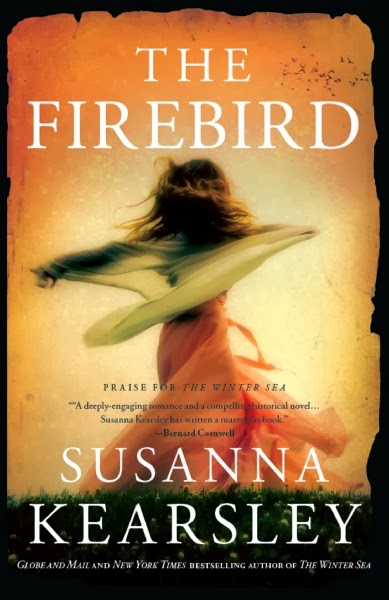
  • The Winter Sea and The Firebird (in that order) — fall in love with history, fiction and one or two independent spirits via these compelling tales 

I made a few bad matches, too. One that comes to mind is A Visit from the Goon Squad: I can't understand why it won so many awards when it could not make me care about the characters and tales. Another was Southern Gods, which despite its fascinating concept was way too gory for me. (That means it will be perfect for my husband, David, whose criteria for a good movie is, "Does anybody die?") I wasn't keen on Caleb's Crossing, but its sin was the wrong narrator who couldn't give me the intricacies of the story I really came to the novel to read. (It was as much about the narrator as it was the subject, a sort of bait-and-switch.)

I took a few detours down "juvenile fiction" lane. I'm a huge fan of Cynthia Rylant's Mr. Putter and Tabby series, who join Mrs. Teaberry and Zeke in more than their share of adventures. Neil Gaiman provided more than a few graphic novels or heavily illustrated stories, and I will forever love the father who good-naturedly traveled around town until his son retrieved him. The experiences of Miss Finch creeped me out, and I was able to re-read a few of my favorite animal tales recreated as graphic novels.

After disliking an iconic novel by Ursula K. LeGuin, we both were redeemed by her Catwing series.

My reading took me me to India, North Korea, Ireland, Scotland, England, Russia, Africa, the Netherlands and Hell. I've lived a different life every day, and lived multiple lives in time. I've been to hell, I've been dead, I've been nearly dead and I've known the right neighbors.

I made a summer reading list and promptly abandoned it. I haven't come to terms with the fact that I will not read everything, and maybe not even everything I want to read, but I'll keep trying. Just tonight I found three more books to read. I'll figure it out. Really.

Here is this year's reading list (probably not totally complete, considering I deleted the list by accident in September and had to recreate it from memory). Did you read any on this list? What are some of your year's reads you'd recommend? Tell me!

2013 Reading List
  1. Dr. Sleep
  2. Hershel and the Hanukkah Goblins
  3. Caleb's Crossing
  4. Mr. Putter and Tabby Clear the Decks
  5. Mr. Putter and Tabby Stir the Soup 
  6. The Poisonwood Bible
  7. Mr. Putter and Tabby Make a Wish
  8. Mr. Putter and Tabby Dance the Dance
  9. Mr. Putter and Tabby Ring the Bell
  10. Creatures of the Night
  11. Crazy Hair
  12. The Day I Swapped My Dad for Two Goldfish
  13. The Arrival
  14. Stitches
  15. Selected Stories/Open Secrets — Alice Munro
  16. The Bookman's Promise
  17. Cat Versus Human
  18. The Dinner
  19. The Creeps 
  20. The Vagina Monologues
  21. The Seventeen Traditions
  22. Humans of New York
  23. Bossypants
  24. The Winter Sea
  25. Sh*t My Dad Says
  26. Illusions
  27. Ella Minnow Pea
  28. Under New York  
  29. The Firebird 
  30. Catwings 
  31. Catwings Return
  32. Wonderful Alexander and the Catwings
  33. Jane on Her Own: A Catwings Tale
  34. Southern Gods
  35. Unnatural Creatures
  36. Dreamfever
  37. Poe's Children
  38. The Tarantula in My Purse and 172 Other Wild Pets
  39. Salt Sugar Fat
  40. The New Yorker Book of Cat Cartoons
  41. The Charles Addams Mother Goose
  42. If I Stay
  43. Inferno
  44. The Ocean at the End of the Lane
  45. Let the Great World Spin
  46. Smut
  47. Next
  48. Every Day
  49. Life After Life
  50. Up the Down Staircase
  51. Will Write for Food
  52. Social Media Marketing
  53. Wishes Fulfilled
  54. The Tao of Womanhood
  55. The Complete Idiot's Guide to Taoism
  56. The Winds of Marble Arch
  57. An Outrageous Affair
  58. The facts in the case of the departure of Miss Finch 
  59.  The Dangerous Alphabet
  60. Blueberry Girl
  61. Notorious Nineteen
  62. The Twelve Terrors of Christmas
  63.  Frankenstein Makes a Sandwich
  64.  M is for Magic
  65.  Tiny Beautiful Things
  66.  Hello, Goodbye, Hello
  67.  The Round House
  68.  A Visit from the Goon Squad
  69.  The Lucky Gourd Shop
  70.  Behind the Beautiful Forevers

Monday, December 30, 2013

Caleb's Crossing, Without Much of Caleb

Caleb's Crossing has been on my bookshelf for years. My friend Carole and I purchased it in 2011 as soon as we saw it for sale. Both she and I enjoyed Geraldine Brooks' books in the past. We have seen met her on previous book signing tours and enjoyed her other books.

And yet this one languished on our shelves for years.

After reading it, I can see why: it was not her best.

The story is of Caleb, a Native American Indian who lived on the island now known as Martha's Vineyard, who was the first of his tribe to graduate from Harvard University in 1665.

Well, not exactly. It's as much about the narrator, Bethia Mayfield, as the character named in the title. Bethia  is a teenage English girl who, remarkably, is a feminist of her age. She was smarter than her older brother, who was being educated to follow his father into the ministry, but was denied an education because of her sex. She chafed against her society's boundaries. One of her society's boundaries was a relationship with any American Indian on the island, with whom her settlement had an uneasy truce. She chose a relationship with a young male of the tribe, an added taboo.

Alas, Caleb's world was described by an outsider with no intimate knowledge of his culture. Indeed, she harbored many of the biases against Caleb's people as her own society did. The second-hand information, filtered through Bethia's eyes, dampened my enthusiasm for the novel. Never did we get Caleb's perspective, and Caleb's words were shared through Bethia, who was not a reliable narrator.

The novel is written as a personal journal kept by Bethia — often written days, months, even years after an event. Her details are complete, rich and full,  not at all like journal entries one would expect so long after the fact, and another reason for me to mistrust her as a narrator. References to historical events and characters were carefully shared to create a sense of connection to this colonial period. If you like colonial history, this might be a good book for you.

Bethia's character was a 21st century woman who every once in a while flashed a colonial, meeker face. The constant interjection of her religious beliefs in her writing and the use of colonial-period language didn't change that fact: she was not a girl of that age.

Finally, there was little urgency in the tale. Only once or twice did I rush through the story to discover the resolution of a situation.

I'm sorry to say I wouldn't recommend this book.

I can, however, recommend every other tome in Brooks' collection. Consider that, then read Caleb's Crossing, and tell me if you agree with my assessment.

Monday, November 18, 2013

The Dinner: The Minion Said It All

I remember the initial clamor over The Dinner. Radio hosts were gasping, "It's an incredible book!" So I picked it up — and found it tedious.

Then I did the only thing I could do: I gave it to my friend Carole, my Other Reading Self, to help me see if it was me or the book. When she handed it back, she said, "You have to give it another try."

Then I mentioned on Twitter that I was giving The Dinner another shot, Random House Canada told me this.

Now I tell you:


Paul and Claire meet Serge and Babette for dinner. What happens next: well, the minion said it all.

Books in translation often display a clumsy gait to me, especially books originally written in German or Germanic languages. (The Reader failed this reader before I even got to the pedophilia.) However, This translation was very smooth, allowing the undercurrent of the narrator's apparent awkwardness to knock the reader off-kilter.

And don't get sidetracked by the narrator's tangents. Don't try to make these threads weave into a familiar pattern. My mistake was that I thought the narrator was drawing me a road map. What I needed, instead, was to sit back and let the story do the driving.

Let me know when you read it. You'll need to talk. I'll be here.

Thursday, November 7, 2013

Tina Fey's Bossypants is Safe, But Still Enjoyable

I wasn't sure what to expect from comedienne Tina Fey's memoir, Bossypants. She is so young, yet iconic and very successful. I wasn't completely disappointed with the memoir, but I also wasn't completely satisfied.
I thought she wrote some funny stuff in her book and I laughed out loud quite often. I like funny. But I've read consistently funnier memoirs by people who aren't "professionally" funny. (Caitlin Moran, anyone? Jenny Lawson?) I know, the curse of the comedienne is that she's always expected to be hilarious, which isn't fair — but only when you bump into her at the grocery store.

May I also ads: I have read more honest and revealing memoirs. At times she skated across the top, rather safely. That was disappointing.

I was a little surprised by what she chose to include in her memoir: some of it was a little out of left field (climbing a mountain at night) and some of it was unexpectedly personal and rather un-funny (wanting a second child). What she revealed about Saturday Night Live, one of her best-known gigs, was guarded. She definitely had a handle on what she wanted to reveal.

Having said that, there were some nice surprises. I liked meeting her father. (What a stylin' badass!) I liked the readers' guide at the end, which gently poked fun at readers' guides and social media. I liked the description of her "30 Rock" staff because she gives props to the people who help her be in the position to write a memoir people want to read. I liked the part about her Palin impersonation; it was kind to the people usually criticized or vilified by those on the "other side of the aisle." I kind of liked the whole Christmas trip chapter.

I liked her "girl power" moment, when she told us how Amy Pohler shut up Jimmy Fallon about what was funny. Personally, I have fond humor long controlled by men who write about what they think is funny and make women the butt of many jokes, or assign them certain roles to support their jokes. I also think women writing for current cinema too often have turned themselves into men to try to be funny to everyone. ("Bridesmaids," anyone?)  Tina didn't do that with her first feature film, "Mean Girls." She looked at how women act and found the humor in it, and it told a great story. I would have liked a little more insight into how she creates and judges "funny."
In the end, I didn't think there wasn't enough Tina in the memoir. I don't think I know her any better now than I did before reading the book. I didn't expect deep, dark secrets — which, don't get me wrong, I'm not sad she doesn't seem to have — but I expected more "her."

I liked her writing, though, and I will continue to watch and read her work.

Have you read Bossypants? What did you think? Tell us in the comments below, or drop me a line.

Tuesday, July 30, 2013

Night Reading and E-Books: Making an Important Decision

I am a fan of the electronic reader. I keep my Kindle with me at all times — one never knows when the need to read shall arise. A quiet lunch? A visit to the doctor's office? Unexpected downtime? All those and more translate into extra reading time, and I am glad I have my choice of books.

I also keep my magazines on it so I'm never without a New Yorker. (Hey, I've got to be prepared for every contingency.)

However, there's a limit to how I will use an e-book.

Now, I didn't understand my limitations until recently, more than a year after I started loading my Kindle — and, now, my iPad (thank you, Kindle Reader app!).

My limitation is simple, but clear: I will not take my Kindle to bed.

Oh, I may work like a demon on my computer until 2 am and I may Pinterest or BuzzFeed on my iPad until way later than I should; I am, after all, only human (despite evidence to the contrary).  Electronics are valuable. However, I always shut off the electronics when I climb between the covers.

Well, now. I must admit, I haven't always made that decision. Until recently, I had no issue with perusing my Kindle or iPad before picking up my book.

Then I realized I couldn't fall asleep.

There is evidence that the light from tablets suppresses melatonin, which can throw off a person's circadian rhythm.

That's science. Here's my own evidence: I don't fall asleep easily or quickly after using electronics with a screen. It takes me an hour or more after computer time before I  am ready to fall asleep.

Don't get me wrong: I am tired. I am weary. I am ready for the day to end. I want to fall asleep. I cannot, however, do that in front of a screen. To be fair, I cannot do it in front of a television, either: I can count on one hand the number of times I have fallen asleep while watching television. The screen hypnotizes me and keeps me awake long after my body is ready for bed.

The same, apparently, applies to tablet reading.

I will always carry and use paper books — not for the smell or heft, not for the comfort, not for the vast collection (sometimes exclusively) available in print. I don't do it because I don't want to battle for a plug in a hospital waiting room or bagel shop. I do it because I don't want to be tethered to a power source or to let the zombies know where I am at night, behind the glowing screen.

I will do it because until they build a "mousetrap" that lets this difficult sleeper fall asleep easily, I won't make my life any harder. E-books have their place — just not in my bed.

Monday, June 10, 2013

Summer Reading Recommendations for Young Readers

My friends Alex and Philip just began their summer vacation — which, for me, always meant books. Scads and piles and armfuls of books. I'd go to the library a couple of times a week to return the ones I had inhaled and come home with more.

It was a gorgeous week in Los Angeles when, as a fourth grader, I holed myself up in my room and read the the entire Chronicles of Narnia. (It was five days, really.) I still remember shivering from the cold of the eternal winter and the White Witch.

But this is today. What do — no, should — the kids of today read? Well, I'm glad you asked. Here are a few suggestions. (People of an age may recognize a title or two.)

Up the Down Staircase — a New York City high school teacher new to the education system experiences life in a big-city high school.

The Graveyard Book — A toddler wanders into a graveyard one tumultuous night and is raised by its residents.

To Kill a Mockingbird — This classic page-turner is one of my personal favorites. Read the book before you see the movie, if you can, if only so you can experience the amazing world of Scout Finch twice.

Anything by H.P. Lovecraft, Agatha Christie, Mark Twain, Christopher Moore, Neil Gaiman, Sir Arthur Conan Doyle, Robert Louis Stevenson, Connie Willis... Read your favorite movie. (Lord of the Rings, anyone?)

Last night, David was thumbing through his Dean Koontz collection to see how much sex was depicted in those books. I chuckled. "I used to read it anyway, even if I didn't understand it," I confessed. "I'd be more worried about gratuitous violence."

So, maybe skip The Strain? (No, on second thought, don't skip it.) Too much swearing? Must be Stephen King — but don't let that stop you, either, not really. Just stop if the writing is too bad — and you alone can decide what that means to you.

Or, you know what? Read a "bad" book if you want to. It's summer.

Don't limit yourself. Go straight from Encyclopedia Brown to Alexandre Dumas to Helter Skelter to Auntie Mame. You'll live. Read what engages you, skip the rest.

Don't let book classifications scare you off, either. Books are written cross-genre, but publishers have to figure out how to market them. So what if it's written for "teens" — it may very well be up your alley anyway. "Classics" are classic for a reason: they're often really, really good. Dumas and Dickens, Doyle and Austen, Stevenson and Wells are fabulous reads, even on the beach. Especially on the beach. Who do you think came up with the idea of the melodrama or swashbuckler?

Enjoy the summer,  and enjoy your books!

Monday, February 4, 2013

Seen on Twitter: Sign O' the Times

Chuckle courtesy of Twitter and award-winning author Alan Heathcock:


Sign O' The Times 

Flight attendant: "Sir, can you please power that down." 

Me: "This is a book."

(For the record: true story.)